Challenge
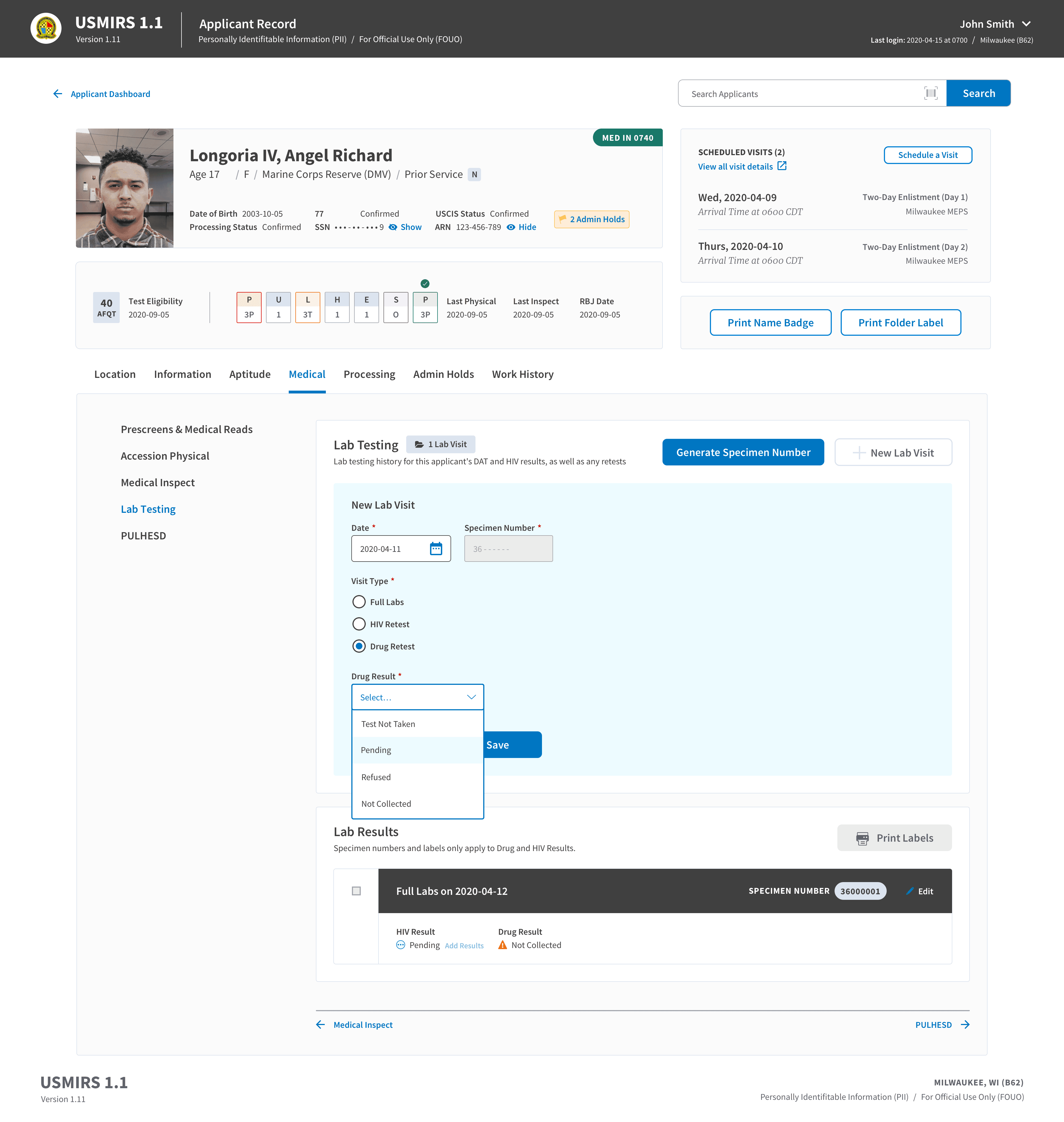
The legacy application was slow, rigid, and decades old. Modernization required not just a redesign, but cultural change. It required helping users distinguish what was truly essential from what was a byproduct of outdated workflows. Our goal: create an experience that honored the gravity of enlistment while making the process simple, clear, and human-centered.

Solution
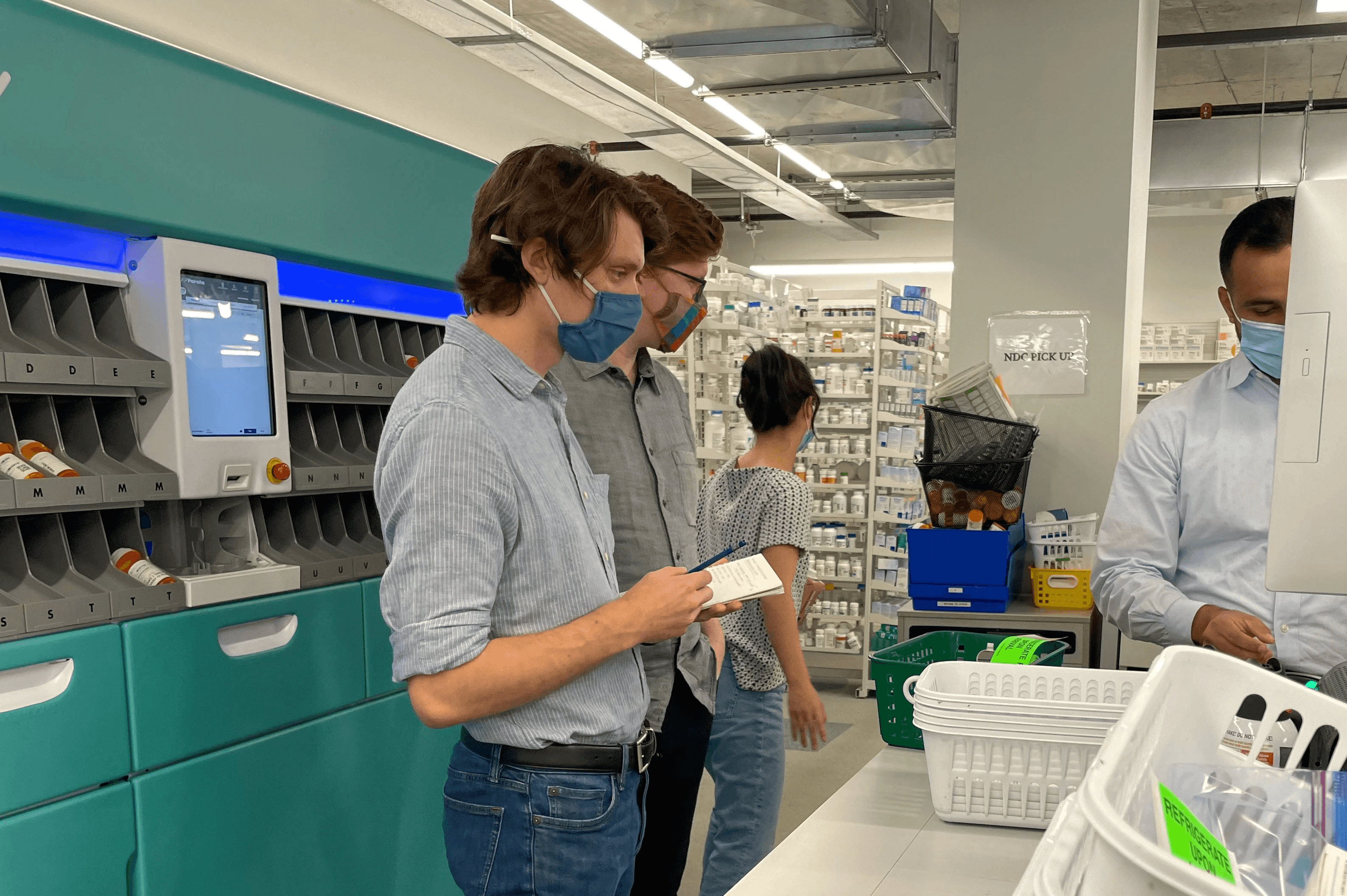
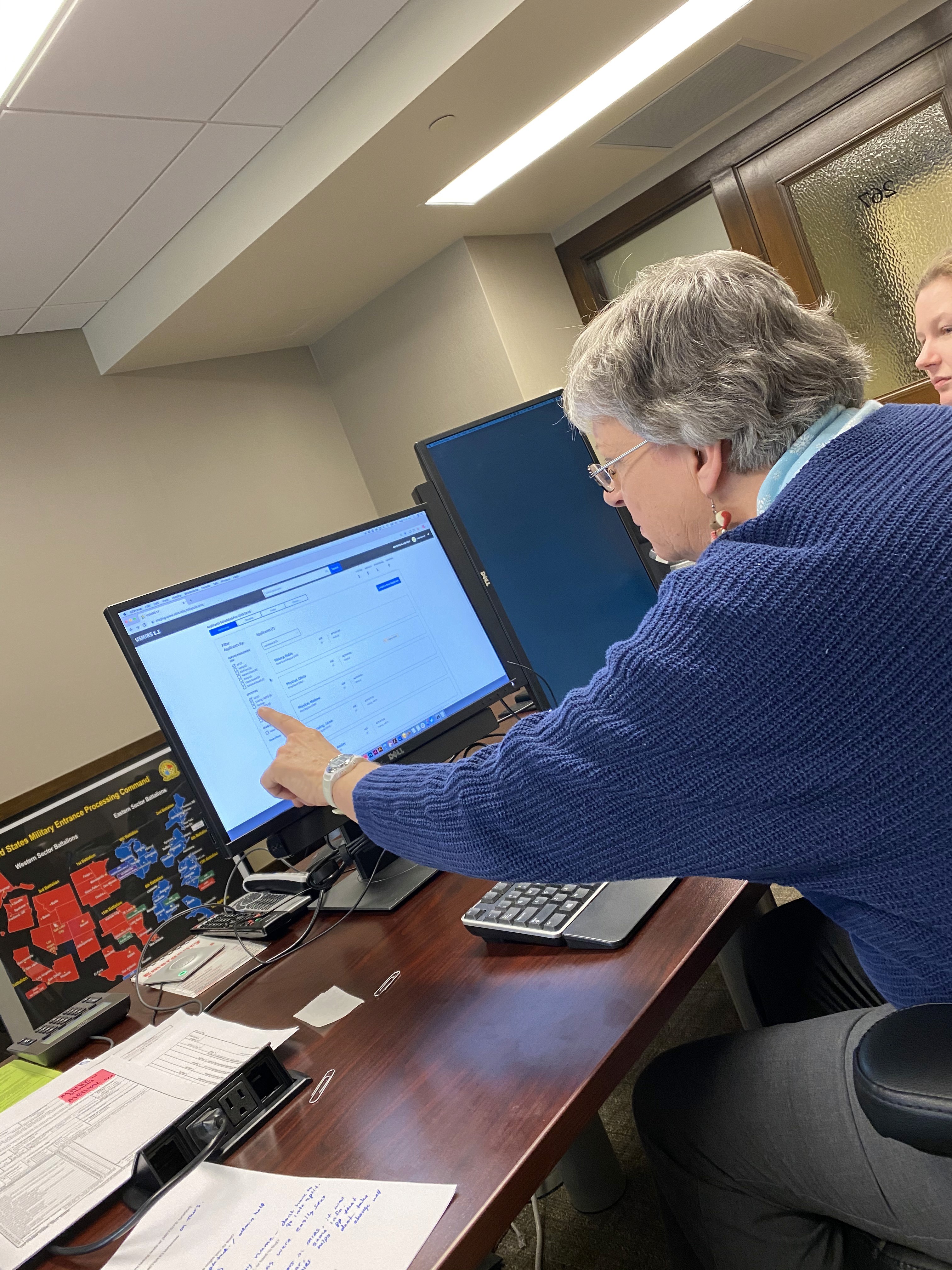
My team conducted ethnographic research, shadowing MEPS staff to understand real workflows, pain points, and workarounds.
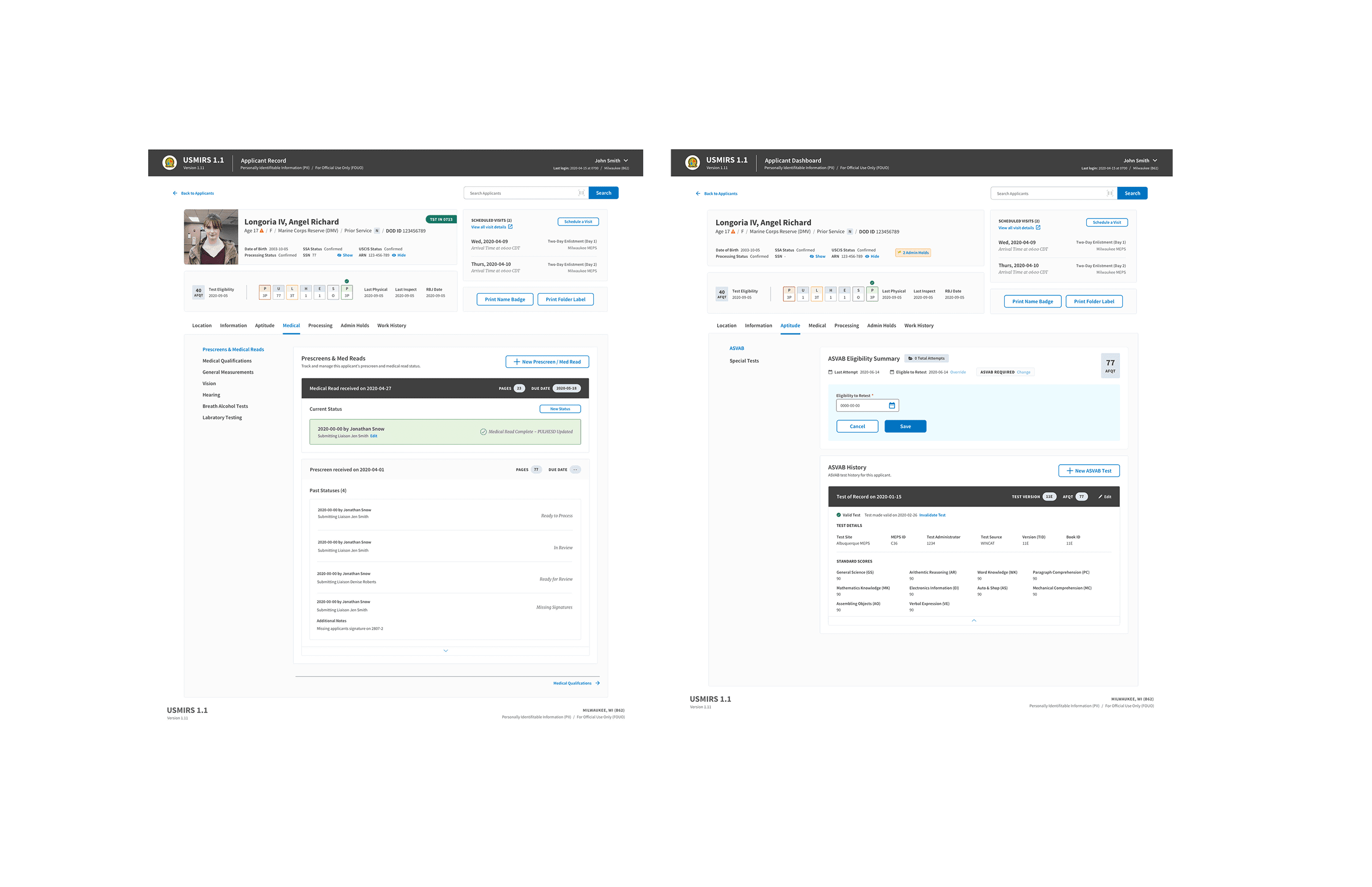
These insights informed a redesign focused on accessibility, transparency, and empathy and ensuring applicants understood each step of their journey.
Through iterative prototyping and on-site testing at multiple MEPS locations, I validated designs, refined flows, and built user trust. Training videos, pilot visits, and continuous feedback loops ensured smooth adoption and ongoing improvement.
I designed the elevated workflows for hardware integrations such as barcode scanners, signature capture, and medical devices to drive faster, more reliable processing.
Impact
Simplified and modernized a decades-old legacy system, creating a cleaner, more intuitive, and future-ready applicant experience.
Humanized the applicant experience across all U.S. MEPS centers, improving clarity and reducing friction at every step.
Strengthened data privacy, accessibility, and security, reinforcing protections for a highly sensitive applicant population.
Improved efficiency and trust through co-creation and continuous testing, elevating workflow reliability through ongoing validation.
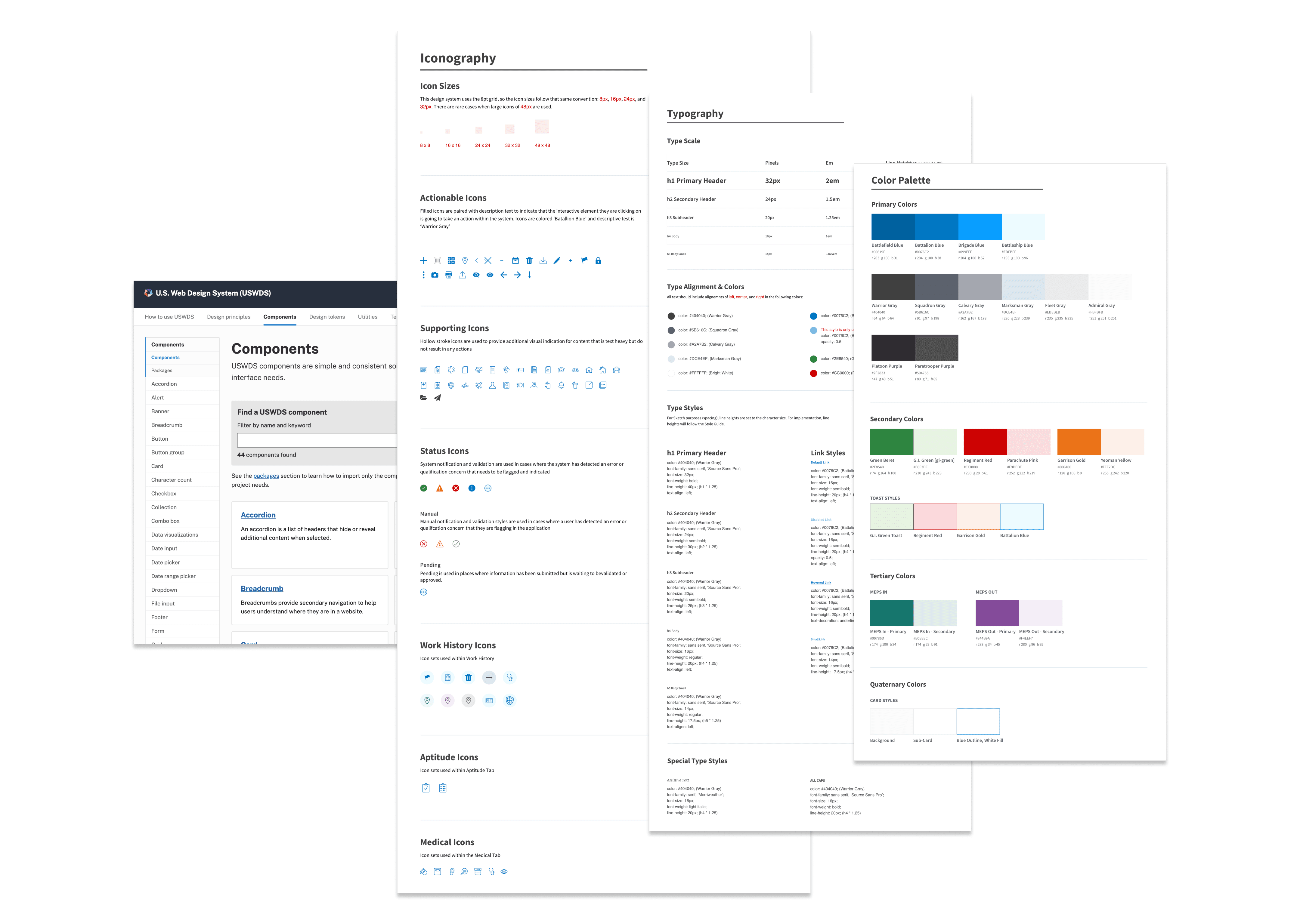
Scaled interaction quality and UI consistency through design system foundations, ensuring coherent patterns, reusable components, and rigorous attention to craft.
I have crafted experiences for some pretty cool brands and startups. Here’s a small sample of the work.